
Receiving a diagnosis of “cancer” is a life-altering moment, yet in the landscape of oncology in 2026, a diagnosis of Stage 1 Early stage of thyroid cancer is one of the most manageable and treatable health challenges a person can face. With a 5-year survival rate exceeding 98-99% for localized cases, the focus has shifted from mere survival to long-term quality of life and precision care.
For patients in Kathmandu and across the region, finding an expert ENT doctor in Nepal who specializes in head and neck oncosurgery is the first step toward a successful recovery. Dr. Tulika Dubey, an MS in ENT with a specialized fellowship in Head & Neck Oncology, has spent over a decade guiding patients through this journey with a human-first, evidence-based approach.
What is Stage 1 Thyroid Cancer?
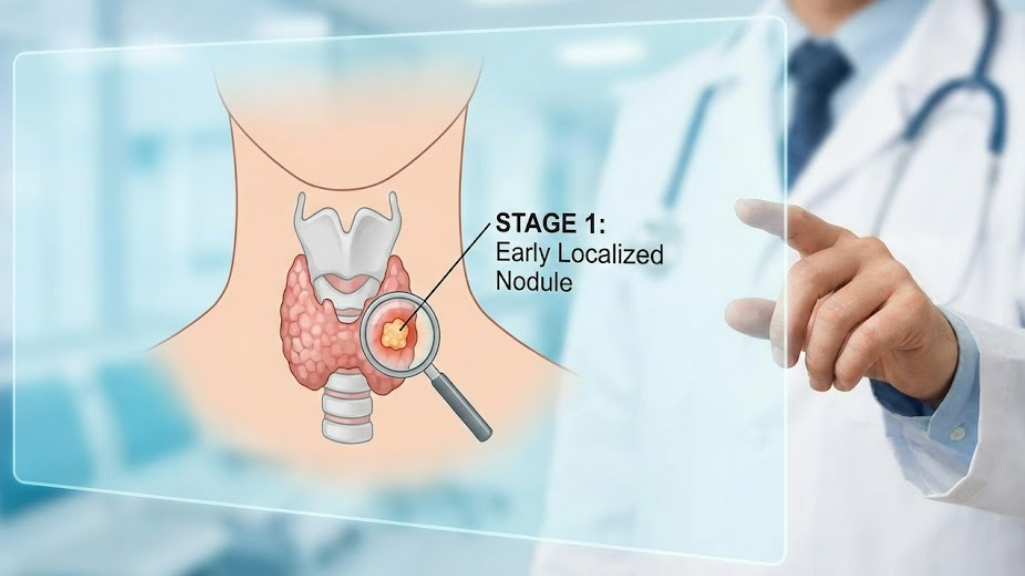
Thyroid cancer staging is determined by the TNM system: Tumor size (T), Lymph node involvement (N), and Metastasis (M). In 2026, the definition of Stage 1 Early stage of thyroid cancer remains focused on localization and size.
The Staging Criteria (Simplified)
For the most common types Papillary and Follicular thyroid cancer Stage 1 is typically defined based on the patient’s age and the tumor’s characteristics:
- Patients under age 55: Any tumor size, with or without spread to nearby lymph nodes, provided it has not spread to distant sites (like lungs or bones).
- Patients age 55 and older: The tumor is 2 centimeters or smaller and is confined strictly to the thyroid gland itself.
At this stage, the cancer is “localized.” It has not breached the capsule of the thyroid or invaded distant organs, which is why the prognosis is exceptionally high. Consulting a Thyroid doctor in Nepal early allows for these precise measurements to be taken via high-resolution ultrasound.
Symptoms of Early-Stage Thyroid Cancer
One of the most challenging aspects of early-stage thyroid cancer is that it is often “silent.” Most patients do not feel ill, and their thyroid hormone levels (TSH, T3, T4) usually remain perfectly normal.
Common Signs to Watch For:
- A Painless Lump: The most frequent sign is a nodule or lump felt in the front of the neck.
- Voice Changes: Persistent hoarseness that doesn’t go away after a few weeks.
- Neck Swelling: A general sense of fullness or visible swelling in the thyroid area.
- Incidental Discovery: Frequently, a Thyroid specialist in Nepal discovers these nodules during a routine physical exam or an imaging test for an unrelated issue (like a carotid artery scan or a neck injury).
Expert Insight: “Nearly 90% of thyroid nodules are benign (non-cancerous). However, any new lump in the neck should be evaluated by an ENT doctor in Nepal to rule out malignancy through professional screening.” Dr. Tulika Dubey
The Diagnostic Path: From Nodule to Knowledge
In 2026, the diagnostic process has become minimally invasive and highly accurate. If you or your primary physician suspect a thyroid issue, the following steps are standard:
1. High-Resolution Ultrasound
This is the gold standard for initial evaluation. It allows the Thyroid doctor in Nepal to see the “architecture” of the nodule. Features like microcalcifications, irregular borders, and increased blood flow can signal a higher risk of malignancy.
2. Fine-Needle Aspiration Biopsy (FNAB)
If the ultrasound shows suspicious features, a tiny needle is used to extract cells from the nodule. This is a quick, outpatient procedure. The cells are then examined by a pathologist to confirm if it is an Early stage of thyroid cancer.
3. Molecular Testing
In some cases where the biopsy results are “indeterminate” (unclear), we now use molecular markers to look for specific gene mutations (like BRAF or RAS). This helps avoid unnecessary surgery for benign nodules.
Treatment Options for Stage 1 Thyroid Cancer in 2026
The treatment for Stage 1 has evolved toward “de-escalation.” This means we aim to provide the most effective cure with the least amount of surgical intervention possible.
Comparison of Treatment Approaches
| Treatment Type | Description | Best Suited For |
| Active Surveillance | Frequent monitoring with ultrasound (no immediate surgery). | Very small (microcarcinomas <1cm) with no aggressive features. |
| Thyroid Lobectomy | Removing only the half of the thyroid containing the tumor. | Stage 1 tumors confined to one lobe; preserves natural hormone function. |
| Total Thyroidectomy | Removing the entire thyroid gland. | Larger Stage 1 tumors or cases with a family history of thyroid cancer. |
| Radioactive Iodine (RAI) | A pill that kills remaining thyroid cells. | Rarely needed for Stage 1, but used if there is a risk of recurrence. |
Dr. Tulika Dubey specializes in microscope-assisted thyroidectomy, a technique that allows for better visualization of the recurrent laryngeal nerve and parathyroid glands. This significantly reduces the risk of voice changes or calcium imbalances after surgery.
Why Timing Matters: The Importance of Early Detection
While thyroid cancer is slow-growing, “Stage 1” is the window of opportunity. When detected early:
- The surgery is often less extensive (Lobectomy vs. Total Thyroidectomy).
- The need for lifelong hormone replacement therapy may be avoided.
- The risk of the cancer returning is less than 1-2%.
As a dedicated ENT doctor in Nepal, Dr. Tulika emphasizes that “Watchful Waiting” is only an option under strict medical supervision. For most, early surgical intervention is the definitive cure.
Living with Thyroid Cancer: Post-Treatment Quality of Life
After successful treatment for Early stage of thyroid cancer, most patients return to their normal lives within weeks.
- Hormone Management: If the entire thyroid is removed, you will take a daily pill (Levothyroxine) to replace the hormones the thyroid used to make.
- Follow-up Care: Your Thyroid doctor in Nepal will schedule regular ultrasounds and blood tests (Thyroglobulin levels) to ensure the neck remains clear.
- Energy and Wellness: With the right dosage of medication, your energy levels, metabolism, and mood should remain stable.
FAQ: Frequently Asked Questions
1. Is Stage 1 thyroid cancer curable?
Yes. Stage 1 has an excellent prognosis, with cure rates near 100% in many clinical cohorts. It is considered one of the most curable forms of cancer.
2. Do I need chemotherapy for thyroid cancer?
No. Chemotherapy is almost never used for Stage 1 thyroid cancer. Treatment usually involves surgery and, occasionally, radioactive iodine.
3. How do I find a qualified Thyroid specialist in Nepal?
Look for an oncosurgeon with a specific fellowship in Head & Neck Oncology. Dr. Tulika Dubey is a recognized expert in this field, practicing at leading centers like Clinic One and Vayodha Hospital in Kathmandu.
4. Can I live a normal life without a thyroid?
Absolutely. While the thyroid is important, its hormones can be perfectly replaced by a small daily pill. Most people without a thyroid lead active, healthy, and long lives.
Conclusion: Empowering Your Health Journey
A diagnosis of Stage 1 Early stage of thyroid cancer is not a sentence of illness, but a call to proactive health management. With the expertise of a specialized Thyroid doctor in Nepal, the path from diagnosis to cure is well-mapped and highly successful.
If you have noticed a lump in your neck or have concerns about your thyroid health, do not wait. Early consultation with an experienced ENT doctor in Nepal like Dr. Tulika Dubey can provide the clarity and specialized care you deserve.
Medical/Professional Review Note
This content has been drafted based on 2026 clinical guidelines for thyroid oncology. It is intended for informational purposes and does not replace a clinical consultation. For personalized medical advice, please consult a registered Thyroid specialist in Nepal.