
Introduction
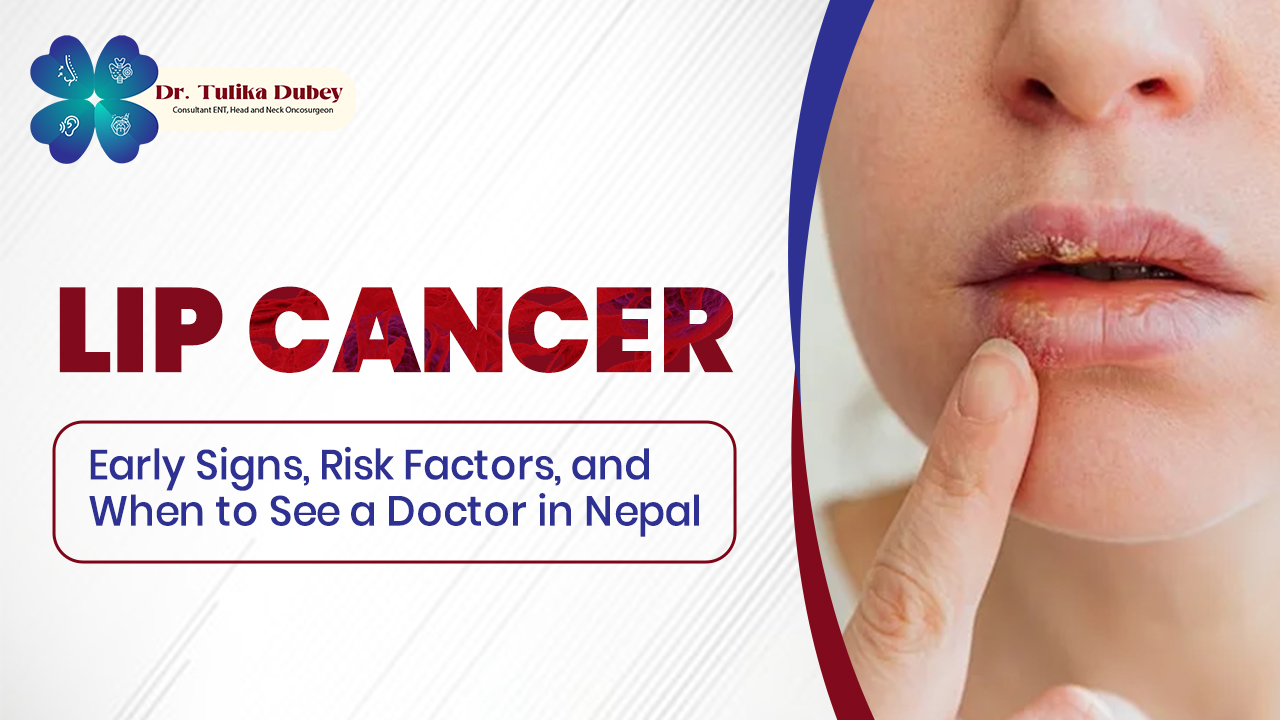
Lip cancer is a form of oral cancer that often begins subtly but can have serious health consequences if not detected early. In Nepal, delayed diagnosis remains a challenge due to limited awareness, late presentation, and confusion about which specialist to consult. As a result, many people seek guidance on whether to visit an ENT doctor in Nepal, a lip cancer doctor in Nepal, or even a thyroid doctor in Nepal when symptoms appear around the mouth, neck, or jaw.
This article is written with a single informational and awareness-focused intent: to help people in Kathmandu, Lalitpur, and across Nepal understand lip cancer, recognize early signs, and know when specialist evaluation is necessary. It is based on evidence-informed medical knowledge and reflects ethical standards aligned with modern healthcare communication.
Why This Topic Matters
Lip cancer has one of the highest cure rates among oral cancers when detected early, yet outcomes worsen significantly with delayed care. Public health data from South Asia indicate that oral and lip cancers are often diagnosed at advanced stages, increasing treatment complexity and long-term impact on quality of life.
Key reasons this topic matters in Nepal:
- High exposure to sunlight in outdoor occupations
- Tobacco and smokeless tobacco use
- Limited routine oral screening
- Low awareness of early warning signs
Understanding lip cancer empowers individuals to seek timely medical evaluation and improves the chances of successful treatment.
What Is Lip Cancer?
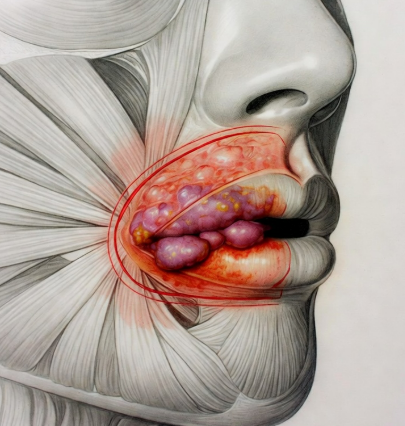
Lip cancer is a malignant growth that develops on the lips, most commonly on the lower lip. It is classified as a type of oral cancer and is most often associated with squamous cell carcinoma.
From a medical perspective, lip cancer:
- Begins as abnormal cell changes
- Progresses gradually in many cases
- Is visible in early stages, unlike some internal cancers
This visibility makes early detection possible if people know what to look for.
Early Signs and Symptoms of Lip Cancer
Lip cancer often starts with subtle changes that may be mistaken for minor issues.
Common Early Signs
- A persistent sore or ulcer on the lip
- A lump or thickened area that does not heal
- Crusting or bleeding without injury
- Changes in lip color or texture
- Numbness or tingling around the lips
Any symptom lasting more than two weeks should be evaluated by a qualified specialist.
Risk Factors for Lip Cancer
Several factors increase the likelihood of developing lip cancer.
Major Risk Factors
- Long-term sun (UV) exposure
- Smoking or chewing tobacco
- Alcohol consumption
- Fair skin with high sun sensitivity
- Poor oral hygiene
- Previous history of oral lesions
Understanding risk factors helps identify individuals who may benefit from earlier screening.
When to See a Specialist
Many people delay consultation because they are unsure which doctor to visit.
Who Should You Consult?
- An ENT doctor in Nepal is often the first point of evaluation for lip, mouth, and throat lesions
- A lip cancer doctor in Nepal (often an ENT or head-and-neck specialist) manages diagnosis and treatment planning
- A thyroid doctor in Nepal may be involved if there is neck swelling, lymph node enlargement, or overlapping head-and-neck concerns
Early referral to the appropriate specialist improves diagnostic accuracy and outcomes.
How Lip Cancer Is Evaluated
Diagnosis involves a structured clinical process.
Common Diagnostic Steps
- Detailed clinical examination
- Medical history and risk assessment
- Biopsy of suspicious lesions
- Imaging (if required) to assess spread
Diagnosis is definitive only after tissue examination, emphasizing the importance of professional evaluation.

Treatment Overview (High-Level)
Treatment depends on the stage, size, and spread of the cancer.
| Stage | Common Management Approach |
| Early-stage | Surgical removal |
| Intermediate | Surgery ± radiation |
| Advanced | Multidisciplinary treatment |
Treatment planning is always individualized and guided by specialist teams.
Role of ENT and Head & Neck Specialists
Lip cancer management requires expertise in facial anatomy, speech, swallowing, and aesthetics.
Specialists such as Dr. Tulika Dubey emphasize:
- Early diagnosis
- Functional preservation
- Ethical, evidence-based care
An experienced ENT specialist plays a central role in both diagnosis and long-term follow-up.
Lip Cancer Care in Nepal
Access
- Specialist care is more available in Kathmandu and Lalitpur
- Awareness is improving but uneven
Challenges
- Late presentation
- Misinterpretation of early symptoms
- Social stigma around cancer
Opportunities
- Improved screening awareness
- Better referral pathways
- Public education initiatives
Local awareness is a key factor in improving outcomes.
Common Myths and Misconceptions
❌ Lip cancer only affects smokers
✅ Sun exposure alone can increase risk
❌ Pain is always present
✅ Early cancer may be painless
❌ Small sores are harmless
✅ Persistent sores require evaluation
❌ Cancer always spreads quickly
✅ Early-stage lip cancer is highly treatable
Frequently Asked Questions (FAQ)
Is lip cancer common in Nepal?
Lip cancer is less common than other oral cancers but remains a significant concern due to delayed diagnosis.
Can lip cancer be cured?
Yes. Early-stage lip cancer has high cure rates when treated promptly.
Which doctor should I see for a lip lesion?
An ENT doctor in Nepal is usually the first specialist to evaluate lip lesions.
Does lip cancer always require surgery?
Treatment depends on stage and individual factors.
Can neck swelling be related to lip cancer?
Yes. Lymph node involvement may require evaluation by head-and-neck or thyroid specialists.
Medical Review Note
This content is provided for educational purposes only and does not replace professional medical consultation, diagnosis, or treatment. Individuals with persistent lip or oral symptoms should seek evaluation from qualified healthcare professionals.
Final Thoughts
Lip cancer is one of the most visible and preventable forms of oral cancer when awareness and early action are prioritized. Recognizing warning signs, understanding risk factors, and consulting the right specialist at the right time can make a significant difference.
For individuals in Nepal, especially in Kathmandu and Lalitpur, informed awareness and timely consultation with experienced specialists remain the foundation of better outcomes.