
Oral and Lip Cancer affects the mouth, lips, tongue, gums, inner cheeks, and surrounding tissues. While these cancers are often visible in early stages, they are still frequently diagnosed late largely due to lack of awareness about oral lip cancer early signs and the tendency to ignore persistent mouth ulcers.
Understanding the types, symptoms, and early warning signs of oral and lip cancer is critical for timely diagnosis and better outcomes. This article explains the condition using evidence-based medical knowledge and insights commonly shared in head and neck oncology practice.
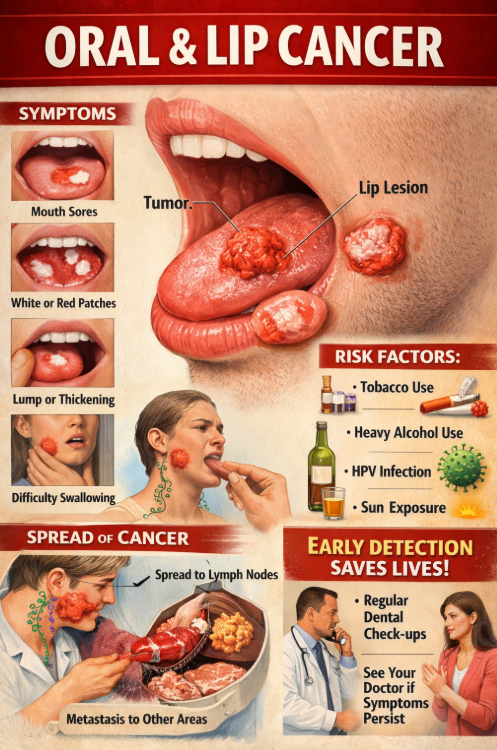
What Is Oral and Lip Cancer?
Oral and lip cancer refers to malignant growths that develop in:
- Lips
- Tongue
- Floor of the mouth
- Gums
- Inner lining of the cheeks
- Roof of the mouth
Most oral cancers are classified as squamous cell carcinoma, originating from the lining of the oral cavity.
Globally, oral cancer is among the top 10 most common cancers, with higher prevalence in South Asia due to risk factors such as tobacco and betel nut use.
Why Early Detection Matters
When detected early, oral and lip cancer:
- Has significantly higher survival rates
- Often requires less aggressive treatment
- Preserves speech, swallowing, and appearance
Unfortunately, many early symptoms are painless, leading people to delay medical evaluation especially when symptoms resemble common mouth ulcers.
Common Types of Oral and Lip Cancer
Understanding where cancer develops helps identify symptoms early.
1. Lip Cancer
- Commonly affects the lower lip
- Often linked to sun exposure and tobacco use
- Usually visible in early stages
2. Tongue Cancer
- May develop on the side or underside of the tongue
- Can affect speech and swallowing as it progresses
3. Cancer of the Floor of the Mouth
- Develops beneath the tongue
- Often spreads early if not detected
4. Gum and Buccal Mucosa Cancer
- Affects gums and inner cheek
- Common in people who chew tobacco or betel nut
Oral and Lip Cancer Early Signs You Should Not Ignore
Early signs are often subtle and mistaken for minor problems.
Common oral lip cancer early signs include:
- A mouth ulcer that does not heal after 2–3 weeks
- Persistent red or white patches inside the mouth
- Thickening or lump on the lip or inside the mouth
- Numbness or pain in the mouth or lips
- Difficulty chewing or swallowing
A key warning sign is oral cancer mouth ulcers that persist, bleed, or increase in size.
Oral and Lip Cancer Symptoms as the Disease Progresses
As the cancer advances, symptoms may become more noticeable.
These include:
- Persistent sore throat
- Loosening of teeth without dental cause
- Jaw stiffness or difficulty opening the mouth
- Voice changes
- Unexplained bleeding from the mouth
Any combination of these oral lip cancer symptoms warrants prompt medical evaluation.
Risk Factors for Oral and Lip Cancer
Several factors increase the risk of developing oral and lip cancer:
- Tobacco use (smoking or chewing)
- Betel nut or gutkha consumption
- Excessive alcohol intake
- Prolonged sun exposure (for lip cancer)
- Poor oral hygiene
- Human papillomavirus (HPV) infection
Reducing exposure to these risk factors plays an important role in prevention.
How Oral and Lip Cancer Is Diagnosed
Diagnosis involves a structured clinical approach:
- Detailed oral examination
- Imaging studies when needed
- Biopsy to confirm cancer type and stage
Early diagnosis allows treatment planning to be more precise and effective.
Treatment Approaches for Oral and Lip Cancer
Oral lip cancer treatment depends on:
- Cancer stage
- Location
- Overall patient health
Common treatment methods include:
- Surgery
- Radiation therapy
- Chemotherapy (in selected cases)
A multidisciplinary approach ensures both disease control and functional preservation.
Clinical Perspective from Head & Neck Oncology
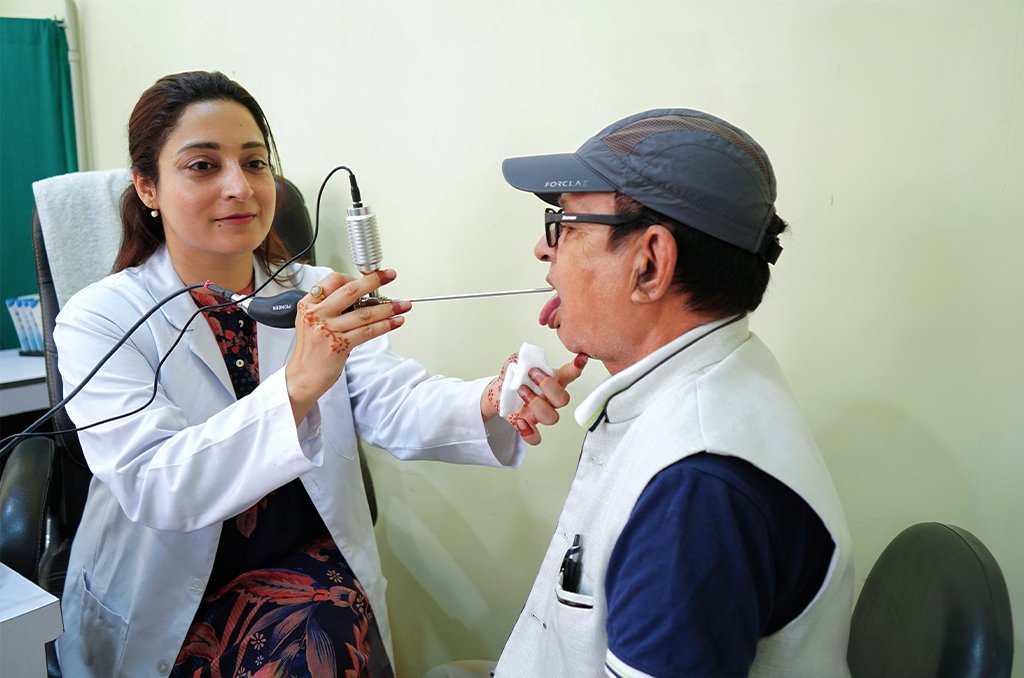
According to clinical insights shared by Dr. Tulika Dubey, ENT–Head and Neck Oncosurgeon with over 7 years of experience, early oral lesions are often overlooked because they appear harmless.
From head and neck oncology practice, persistent mouth ulcers or lip lesions should never be ignored, especially when risk factors such as tobacco use are present. Early referral significantly improves outcomes.
When Should You Seek Medical Evaluation?
Consult a specialist if:
- A mouth ulcer lasts more than two weeks
- Lip lesions crust, bleed, or grow
- Pain, numbness, or swelling persists
- Speech or swallowing becomes difficult
Early evaluation does not always confirm cancer but it ensures serious conditions are ruled out promptly.
Medical Review & Professional Disclaimer
This article is intended for educational and awareness purposes only. Diagnosis and treatment decisions should always be made in consultation with qualified medical professionals, particularly specialists in ENT and head and neck oncology.
Frequently Asked Questions (FAQ)
Are all mouth ulcers cancerous?
No. Most mouth ulcers are benign, but ulcers that do not heal after 2–3 weeks should be evaluated.
Is lip cancer visible in early stages?
Yes. Lip cancer often presents early as a sore or lesion on the lip that does not heal.
Can oral cancer be cured if detected early?
Early-stage oral and lip cancers often have good treatment outcomes.
Who should evaluate suspected oral cancer?
An ENT doctor or head and neck oncosurgeon is best suited for evaluation.
Is oral cancer common in Nepal?
Yes. Due to tobacco and betel nut use, oral cancer remains a significant health concern in Nepal.
Final Thoughts
Oral and Lip Cancer is often visible in its early stages but only if people know what to look for. Persistent mouth ulcers, lip lesions, or unexplained oral symptoms deserve timely medical attention.
Awareness, early detection, and specialist evaluation remain the most effective tools in reducing the impact of this disease.