
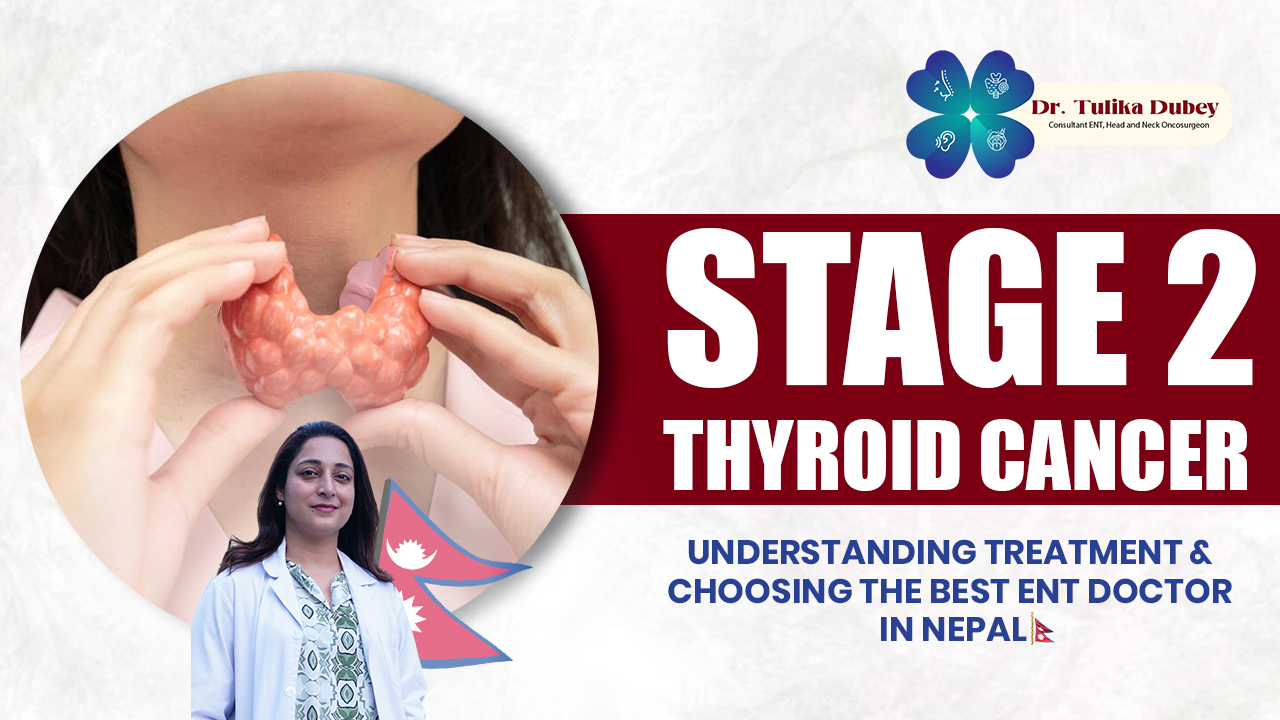
Thyroid cancer is one of the most treatable cancers when diagnosed early. According to global cancer data, thyroid cancer accounts for over 580,000 new cases annually worldwide, with increasing detection rates due to improved imaging and screening. In South Asia, awareness and early diagnosis are steadily improving, but delayed consultation remains a challenge.
When diagnosed with Stage 2 thyroid cancer, patients often feel anxious and uncertain. Understanding the condition, treatment options, and the importance of consulting the Best ENT Doctor in Nepal can significantly improve outcomes and decision-making.
This article provides clear, evidence-based information about Stage 2 thyroid cancer and highlights why specialized ENT care, such as that provided by Dr. Tulika Dubey, plays a critical role in management.

What Is Thyroid Cancer?
The thyroid is a butterfly-shaped gland located in the front of the neck. It produces hormones that regulate metabolism, heart rate, and body temperature.
Thyroid cancer occurs when abnormal cells grow uncontrollably in this gland.
Common Types of Thyroid Cancer
- Papillary thyroid carcinoma (most common, ~80%)
- Follicular thyroid carcinoma
- Medullary thyroid carcinoma
- Anaplastic thyroid carcinoma
Papillary and follicular cancers are generally slow-growing and highly treatable when detected early.
What Does Stage 2 Thyroid Cancer Mean?
Cancer staging describes how far the disease has spread.
Stage 2 thyroid cancer typically means:
- The tumor may be larger than 2 cm
- It may have spread to nearby lymph nodes
- It has not spread to distant organs (in most cases)
Staging can vary slightly depending on patient age and cancer type.
Why Stage Matters
Staging helps doctors decide:
- Type of surgery required
- Need for radioactive iodine therapy
- Long-term follow-up plan
Early-stage thyroid cancer has an excellent prognosis. Five-year survival rates for localized thyroid cancer exceed 95% globally.
Symptoms of Stage 2 Thyroid Cancer
Many patients have minimal symptoms. Some notice:
- A painless lump in the neck
- Hoarseness or voice changes
- Difficulty swallowing
- Swollen lymph nodes
- Persistent cough not related to infection
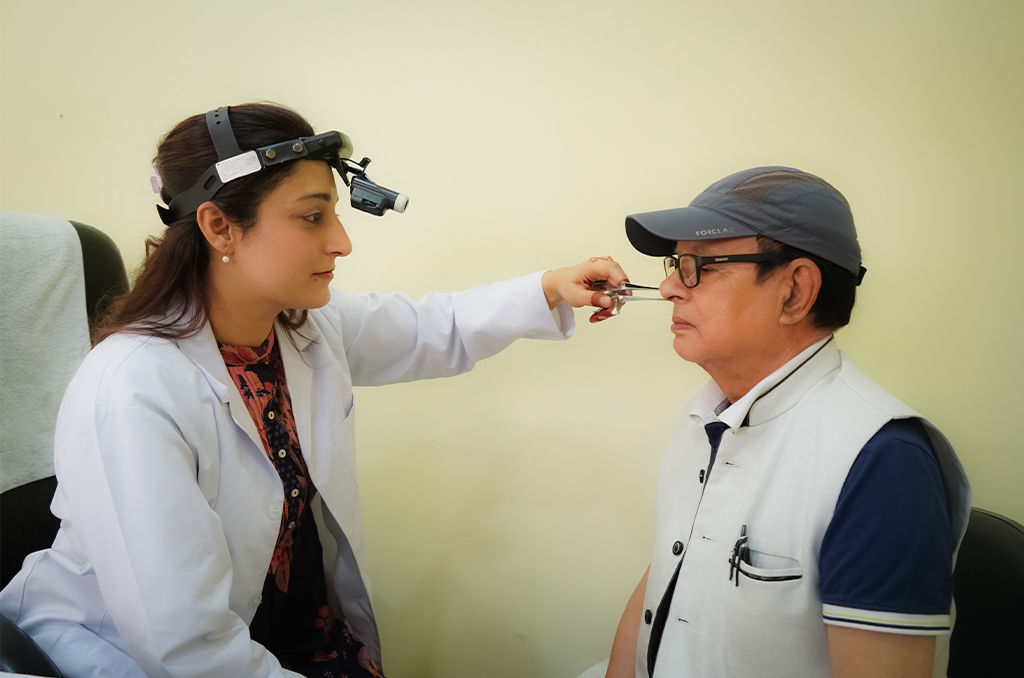
Any neck swelling should be evaluated by a qualified ENT doctor in Kathmandu.
Why Consult an ENT Specialist?
An ENT specialist in Nepal (Ear, Nose, and Throat doctor) is trained to diagnose and surgically manage conditions of the neck and thyroid.
Thyroid surgery requires:
- Precision to protect vocal cords
- Careful lymph node assessment
- Avoidance of damage to parathyroid glands
Choosing the Best ENT Doctor in Nepal ensures:
- Accurate diagnosis
- Safe surgical technique
- Proper staging
- Long-term follow-up
Diagnostic Process
Evaluation usually includes:
1. Clinical Examination
Physical assessment of the neck mass.
2. Ultrasound
Identifies tumor size and lymph node involvement.
3. Fine Needle Aspiration (FNA) Biopsy
Confirms cancer diagnosis.
4. Blood Tests
Thyroid function tests (TSH, T3, T4).
5. Imaging (if required)
CT scan or MRI for advanced assessment.
An experienced ent doctor in Nepal integrates all findings before recommending treatment.
Treatment Options for Stage 2 Thyroid Cancer
Treatment depends on tumor size and spread.
1. Surgery (Primary Treatment)
Surgical options include:
- Total thyroidectomy (complete removal)
- Lobectomy (partial removal in select cases)
- Lymph node dissection (if spread is confirmed)
Surgery is the cornerstone of treatment.
A top ent specialist in Nepal focuses on preserving nerve function and minimizing complications.
2. Radioactive Iodine Therapy
May be recommended after surgery to destroy remaining thyroid cells.
Not all patients require this therapy.
3. Thyroid Hormone Therapy
After total thyroid removal, lifelong hormone replacement is required.
This also helps suppress cancer recurrence.
Possible Complications of Thyroid Surgery
When performed by a skilled ent specialist in Nepal, complication rates are low.
Potential risks include:
- Temporary voice changes
- Low calcium levels
- Bleeding
- Infection
Choosing the Best ENT Doctor in Nepal significantly reduces these risks.
Role of Dr. Tulika Dubey in Thyroid Cancer Care
Dr. Tulika Dubey is an experienced ENT specialist known for managing thyroid disorders and head & neck conditions. Her approach emphasizes:
- Detailed evaluation
- Evidence-based treatment planning
- Safe surgical practice
- Patient education
- Post-operative follow-up
Patients seeking a reliable ent doctor in Nepal often prioritize surgical expertise and clear communication.
Recovery After Thyroid Surgery
Recovery typically involves:
- 1–3 days hospital stay
- Mild neck discomfort
- Voice monitoring
- Regular thyroid hormone adjustment
Most patients resume normal activity within 2–3 weeks.
Follow-up includes:
- Thyroglobulin testing
- Periodic ultrasound
- Endocrinology consultation
Long-Term Outlook
Stage 2 thyroid cancer generally has an excellent prognosis.
Key factors influencing outcomes:
- Early detection
- Complete surgical removal
- Adherence to follow-up
- Hormone therapy compliance
Survival rates remain high when managed by a qualified ent specialist in Nepal.
When Should You See an ENT Doctor in Nepal?
Consult immediately if you notice:
- Persistent neck lump
- Voice hoarseness lasting over 2 weeks
- Rapidly growing neck mass
- Swallowing difficulty
- Family history of thyroid cancer
Early consultation with the Best ENT Doctor in Nepal improves treatment outcomes.
Importance of Specialized ENT Care in Nepal
Thyroid surgery is not routine general surgery.
It requires:
- Detailed knowledge of neck anatomy
- Nerve preservation expertise
- Cancer staging understanding
A trained top ent specialist in Nepal ensures:
- Oncological safety
- Cosmetic consideration
- Functional preservation
Frequently Asked Questions (FAQ)
1. Is Stage 2 thyroid cancer curable?
Yes. Most cases have a high cure rate when treated early.
2. Does thyroid surgery affect voice permanently?
Permanent voice damage is rare when surgery is performed by an experienced ENT specialist.
3. Will I need lifelong medication?
Yes, if the thyroid is completely removed, hormone replacement is required.
4. Is radioactive iodine always necessary?
No. It depends on tumor size and pathology findings.
5. How do I choose the best ENT doctor in Nepal?
Look for experience in thyroid surgery, proper credentials, and structured follow-up care.
Professional Medical Review Note
This article is for educational purposes only. It reflects evidence-based ENT and thyroid cancer management practices. Patients should consult a licensed ENT specialist for personalized diagnosis and treatment.
Final Thoughts
Stage 2 thyroid cancer is highly treatable with early and expert intervention. Understanding the condition reduces fear and empowers informed decisions.
Choosing the Best ENT Doctor in Nepal, such as Dr. Tulika Dubey, ensures safe surgery, proper staging, and comprehensive follow-up care.If you experience symptoms or have been diagnosed with thyroid cancer, timely consultation with an experienced ent doctor in Nepal is essential.